Concerned About Smoke Odor
During care, smoke filtration and low-odor management help reduce the strong smell often associated with traditional moxa, making the clinic experience easier to relax into.
Prosperous Acupuncture presents traditional moxibustion as a modern clinic specialty: reducing smoke concerns, keeping the warming experience steadier, and allowing clinic staff to assess each patient based on constitution, treatment area and care goals.
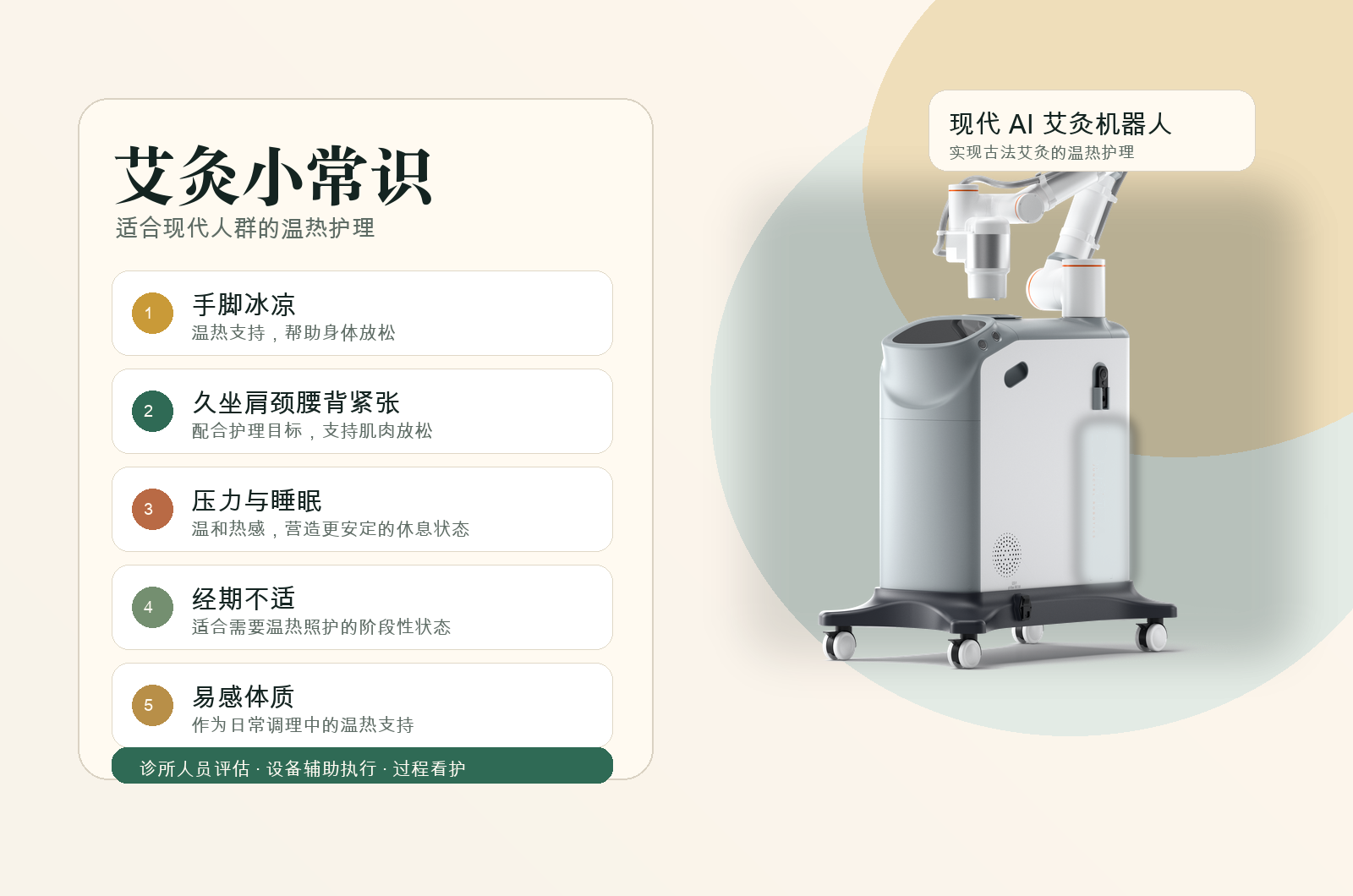
During care, smoke filtration and low-odor management help reduce the strong smell often associated with traditional moxa, making the clinic experience easier to relax into.
Clinic staff first assess constitution, treatment area and body sensation, then adjust warmth level and timing. The goal is steady comfort, not simply making it hotter.
Moxibustion is not suitable for everyone. We assess goals such as pain, cold sensitivity, fatigue recovery or women’s warming care, then explain relevant precautions.
Moxa may be used as warming support alongside acupuncture, Tuina, cupping, postpartum recovery or sports recovery, depending on the care plan.
This page introduces Prosperous Acupuncture’s specialty moxibustion care. Suitability depends on clinic assessment and appointment confirmation.
For local areas needing steady warming stimulation and gentle point-focused care.
Uses rotating warmth to cover a broader area, useful for muscle tension, localized cold-damp sensation or larger care areas.
Creates a rhythmic up-and-down warming pattern for points or local areas that need a more defined warmth rhythm.
Moves back and forth across the care area, suitable for long muscle groups, the low back or tissue around joints.
Follows meridian pathways with continuous warming care for plans that need broader channel-oriented support.
We keep the warming-care logic of traditional moxibustion while improving odor control, stability and process control so warmth coverage feels more precise and manageable.
Precautions: Specialty moxibustion still requires clinic staff to assess suitability and monitor the patient during care. Patients with unusual skin sensation, special health conditions, pregnancy, or other health concerns should consult the clinic first.
You can book online or call first to confirm whether this service fits your care goals.